TRYBE Sensory Tech Is Designing Technology Around Different Ways of Experiencing the World
TRYBE Sensory Tech starts from a product question rather than a clinical one: what does good design look like when a user experiences sound, light and touch differently?
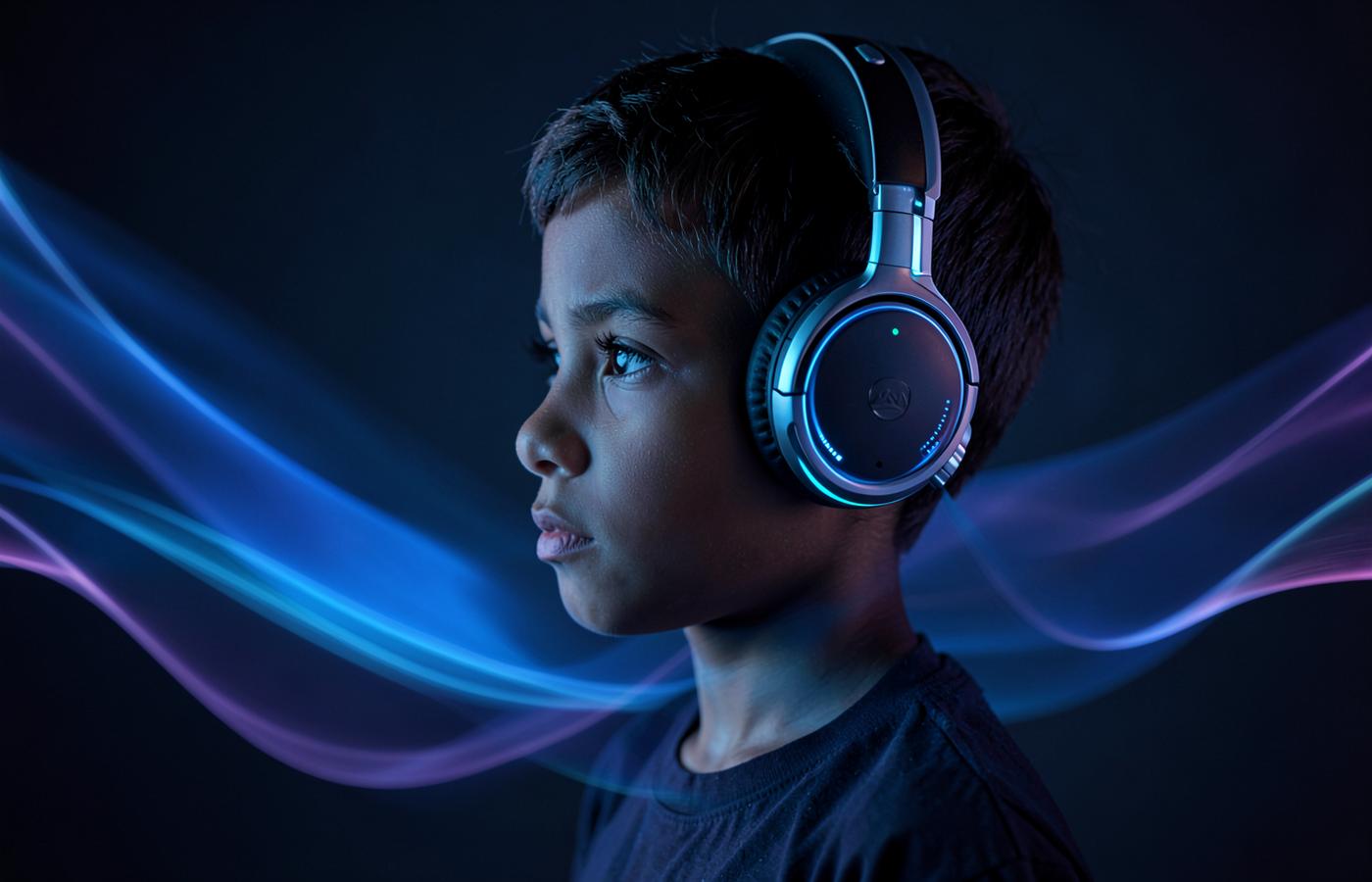
Most consumer technology is designed for an imagined median user — average hearing, average vision, average tolerance for noise and stimulation. TRYBE Sensory Tech, a technology business within the Nova Capital Holdings group, is built on the observation that this median describes almost nobody, and describes many children not at all.
The company's focus is sensory experience: how devices, environments and software can be tuned to the way a specific person actually perceives the world.
Not a disability story
TRYBE's team is deliberate about framing. The work is not positioned as charity or remediation. It is product design, held to the same standards as any premium consumer technology: industrial design, comfort, latency, battery life, repairability, and interfaces that a nine-year-old can operate without help.
Access is not an accessory feature. It is a design constraint that makes the whole product better.
Sound, light and touch as inputs
Sensory technology treats stimulation as something to be shaped rather than maximised. That means hardware and software that can soften an environment — reducing overwhelming frequencies, smoothing transitions, replacing alarm with signal — and equally can enrich it where a child is seeking input.
Haptics, adaptive audio profiles, controllable light and predictable interface rhythm are all part of the vocabulary. Each is tunable, because the correct setting for one child is the wrong setting for another.
Personalisation through AI
This is where machine learning earns its place. Rather than presenting families with a wall of settings, TRYBE's approach is to learn a profile over time — which conditions produce calm and engagement, which produce withdrawal — and to adjust quietly in the background.
The team's stated principle is that personalisation should reduce the cognitive load on parents and teachers, not add to it. Data handling is treated as a first-order design problem, because the users are children.
Built with families and educators
Product development runs through the people who live with the outcome. Parents, therapists, special-education teachers and the children themselves are involved in testing, and the feedback loop is short by design.
That has practical consequences. Devices must survive daily handling. Setup must be possible in minutes. Instructions must work for a caregiver with limited time and no technical background.
An African accessibility market
Across much of the continent, assistive technology is imported, expensive and poorly matched to local conditions — languages, curricula, power reliability and the realities of shared devices in a classroom.
TRYBE's opportunity is to design for those conditions from the start: local language support, offline capability, durability, and price points that a school or family can reach without an aid programme.
The long view
Within the group, TRYBE sits in a portfolio that includes education, consumer technology and impact initiatives. The company's ambition is to make inclusive design an ordinary expectation rather than a specialist niche — so that a child's way of experiencing the world is something products are built around, not around which products apologise.
TRYBE Technologies
A Nova Capital Holdings group company.
Related news
 Sep 12, 2026
Interned Is Building the Route From Campus to First Job in Africa
A placement platform matching college students across the continent with real internship opportunities.
Read Article Sep 11, 2026
ShadowTeachers.io Is Building Support Around Every Learner Who Needs It
A special education needs service connecting schools and families with trained shadow teachers.
Read Article
Inclusive Design Is Just Good Product Design
What building for sensory difference teaches teams about building for everyone.
Read Article