Nairobi's Next Residential Decade
Nairobi's housing conversation is dominated by supply numbers. The more useful question is what kind of homes hold their value.
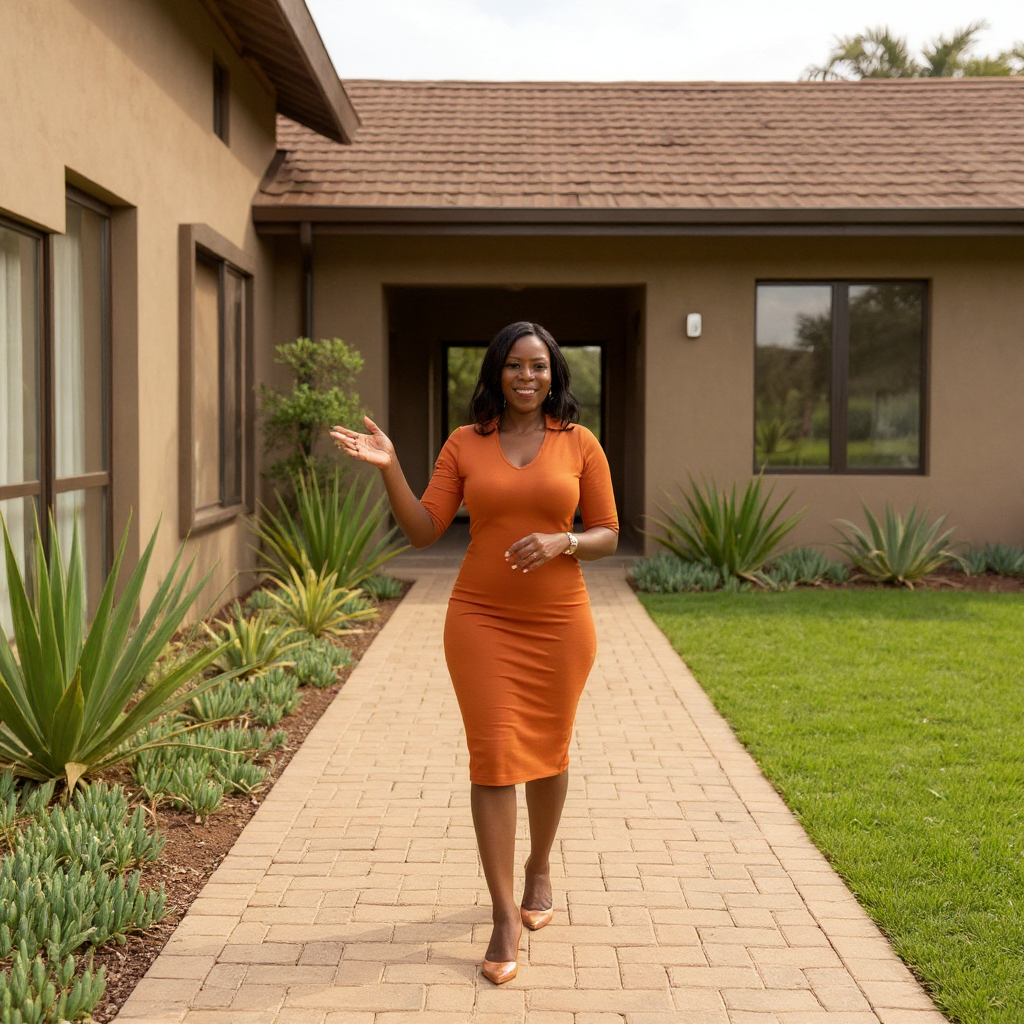
Nairobi's housing conversation is usually conducted in units: how many are needed, how many were delivered, how large the shortfall remains. Those numbers matter, but they say nothing about the question a family actually faces, which is whether a particular home will still be a good place to live — and worth owning — in fifteen years.
Rapid urban growth tends to produce two kinds of stock: the very cheap and the very fast. Both age badly. The middle — well-built family housing with genuine landscape, sound orientation and services that work — is comparatively thin, and it is where the group's residential attention sits.
What buyers are actually asking for
Spend time with buyers in Karen, Runda, Kitisuru or the newer Kiambu Road corridors and the same list recurs. Space that works for an extended family, including a room that can become a grandparent's or a returning adult child's. Water security that does not depend on a single borehole or a truck. Power that rides through outages. Outdoor space children can use unsupervised. A realistic school run. And running costs that do not climb every time the tariff does.
Buyers are increasingly literate about build quality. That changes what is worth building.
Build cost versus running cost
The most consequential decisions in Nairobi residential are made at design stage and paid for monthly by the owner. Orientation and shading determine whether rooms need cooling at all. Roof area determines how much water can be harvested. Insulation, glazing and thermal mass decide the comfort of a house that will never be centrally heated or cooled. Solar with proper battery sizing turns an outage from an event into a non-event. None of these are luxuries; they are the difference between a home that costs little to live in and one that quietly taxes its owner.
Land, density and doing density well
Land economics push toward density, and density is not the enemy — badly designed density is. Kenya's better recent schemes show the difference: fewer, larger units with proper cross-ventilation and shared green space outperform packed towers with token balconies, both in liveability and in resale. The design question is how to raise homes per hectare while improving light, air and planting rather than deleting them, and how to keep parking, refuse and service access from consuming the ground plane.
Service charge is a design decision
In practice, the most common cause of a development declining is not construction quality but management. Lifts, pumps, generators, gardens and security all convert into a monthly charge, and a scheme whose charge outruns its residents' budgets deteriorates quickly. Designing for a manageable service charge — simpler systems, robust plant, landscape that survives on harvested water — protects value more reliably than any finish specification.
The patient position
Nova Capital Holdings' real-estate view is long-dated: build for the second owner, not only the first. That means specifying what will still be sound after a decade of use, choosing landscape that improves with age, and accepting slower absorption in exchange for stock that holds its value when the next cycle turns.
An Insights piece on residential design and market behaviour, not a market forecast or an investment recommendation.
Related news
 Jul 28, 2026
Mara Pines Reimagines Residential Living in Nairobi
A nature-forward residential initiative designed for modern African family living.
Read Article Sep 9, 2026
Hello Kenya: Mindset Training Built on Science, Delivered Through Technology
Personalised sport psychology for athletes at every level, developed with coaches and practitioners.
Read Article
The Airport Is the New Runway
How travel style became the most honest measure of a wardrobe.
Read Article